Swiss German is not simply Swiss German.
When do Swiss media productions use dialect, when High German, and which dialect suits your campaign? An insight into Swiss language culture.
When production enquiries reach me from German-speaking countries or from further afield, I am usually asked for a voice over in 'Swiss German'. But Swiss German is not simply Swiss German: on the one hand there are the regional dialects spoken in German-speaking Switzerland, which vary a great deal and are mostly not understood by our German neighbours. On the other hand there is what is known as Swiss High German: every German understands it, but the proximity to French has given it a slightly different vocabulary.
The geography of Switzerland's languages
Switzerland has four national languages. Swiss German is spoken in German-speaking Switzerland, the orange area on this map, where roughly two thirds of the population live. Anyone planning a campaign for the whole country therefore usually produces several language versions.
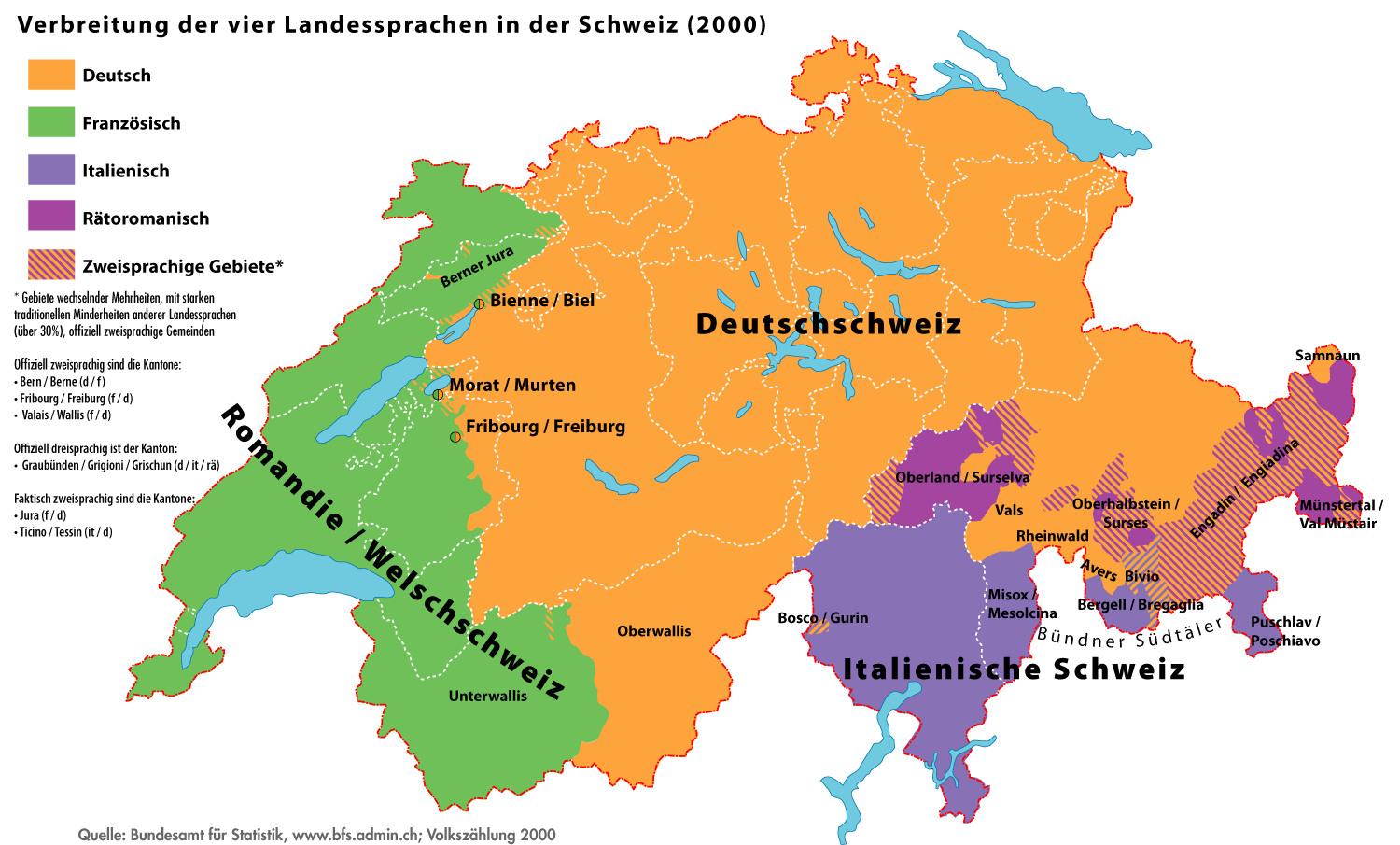
Facts about Swiss language culture in media production
Many production companies from abroad assume that the German-speaking Swiss both speak and write Swiss German, and that the media mirror this. The reality is more nuanced:
- Swiss German does not exist as an official language. The dialects are only spoken; you will look for spelling rules in vain.
- Written communication is in standard German. Only in relaxed personal exchanges (text messages, for example) do people write their own dialect, freely interpreted.
- Television often uses a 'neutral Swiss German'. The exceptions are the news and around half of all commercials, which want to convey an international or official character.
- Voice overs in High German are almost always recorded by Swiss speakers with stage German training; because of the French influences and the Helvetic vocabulary, voice over artists from Germany are rarely booked.
- For national advertising in Swiss German, the choice of dialect is decisive. What is usually wanted is a mix of Zurich German and Bernese German, in effect the dialect of Olten/Solothurn, wryly called 'Bahnhof Buffet Olten'. It is the linguistic middle ground of German-speaking Switzerland and most people perceive it as 'neutral'. My softened Bernese German hits exactly that middle ground.
How the regional dialects are perceived
A (subjective) look at how the larger Swiss language regions get along:
- Zurich German is thought of as self-assured, thanks to its rather hard sound and the fast pace of life, ideal for progressive, urban communication.
- Bernese German is thought of as slow, thanks to its easy-going sound, but most people are very fond of it, perfect when warmth and trust are what count.
- Basel German and the eastern Swiss dialects (St Gallen, Thurgau, Schaffhausen) go down less well in the rest of the country.
- Many find Valais German likeable, but it is hard to understand; Grisons German is popular, though it carries a mountain-farmer image; the central Swiss dialects (Lucerne, Zug, Schwyz, Uri, Obwalden and Nidwalden, Glarus) are held to be pleasant and likeable.
How big the differences really are
The Swiss usually understand each other without any trouble. Even so, individual words can sound completely different from canton to canton. This map shows it with a single word: what do you call the core left over from an apple?
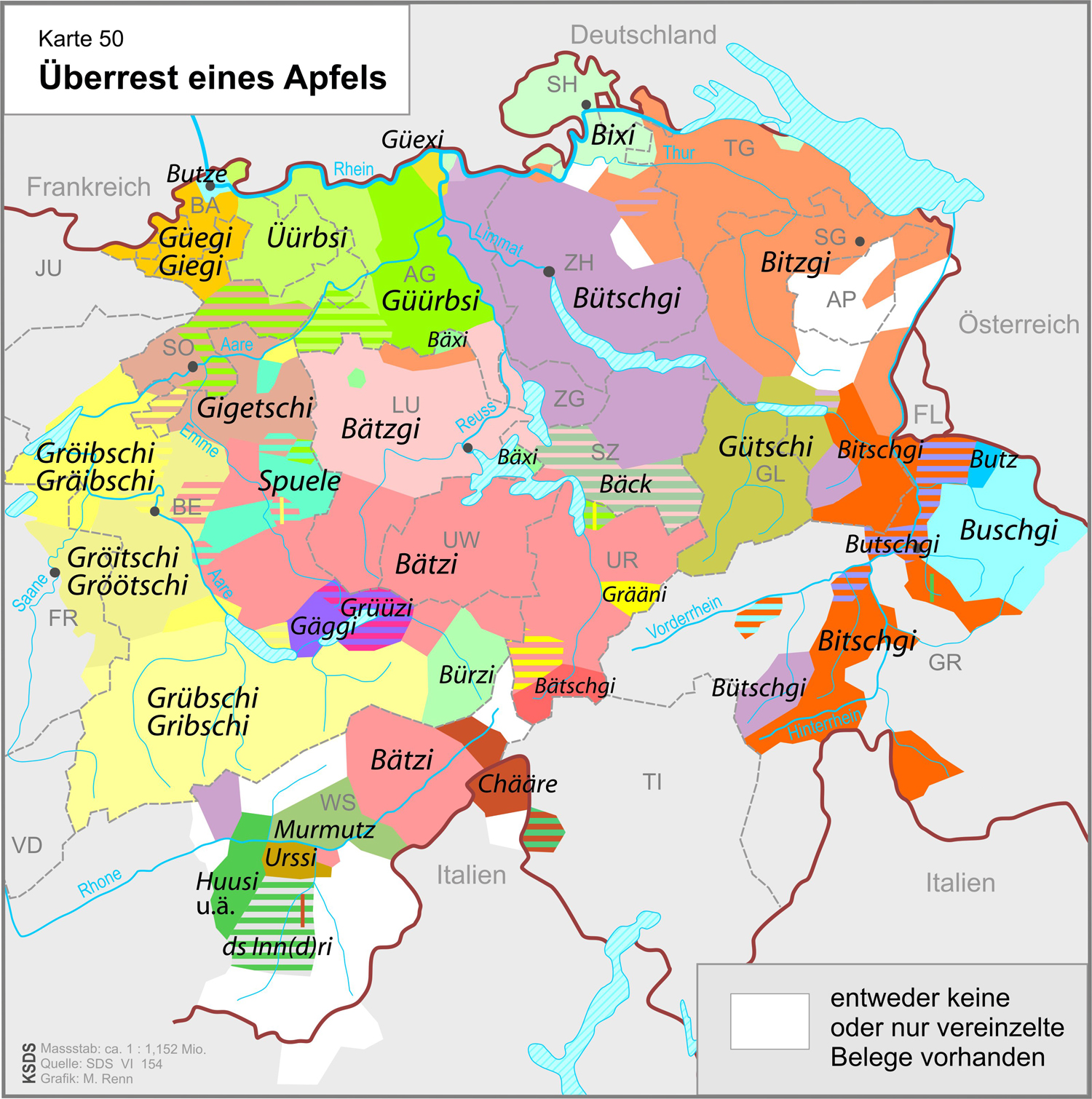
The dialects understood best across German-speaking Switzerland are spoken in the cantons of Zurich, Aargau, Lucerne and Zug.
Three language varieties, one voice over artist.
All the recordings come from real productions. You will find them collected on the 'Dialects' page.
Zurich German
From the hard city-Zurich dialect to the softer variant bordering on Aargau.
To the audio samples →Bernese German
My softened Bernese German hits the linguistic middle ground of German-speaking Switzerland.
To the audio samples →German (CH)
German without the colouring of Germany, in whatever shade you need.
To the audio samples →What Swiss German gets booked for.
Click on a field to hear and see examples.
Swiss German taken for a ride
Just how different the Swiss German dialects sound is captured by the Swiss artist Bligg in his song 'MundART': self-assured champions of each dialect fight a verbal battle over the most Swiss dialect of all, tongue in cheek.
Which dialect suits your production?
I am happy to advise you, and to deliver the matching audio sample before you decide. With my own sound studio that is quick and straightforward.